Jun 9, 2026

Every spring, therapists across Canada begin to notice a familiar shift:
The darkness of winter recedes. The days lengthen. Patios fill. Trails become busy again. People spend more time moving their bodies, connecting socially, and engaging with the world around them. There is often a subtle but meaningful improvement in mood that accompanies the arrival of warmer weather.
This seasonal lift is not simply anecdotal. Research consistently demonstrates that increased sunlight exposure can positively influence circadian rhythms, sleep quality, energy levels, and mood. More daylight often translates into greater physical activity, increased social engagement, and enhanced opportunities for restorative experiences in nature. Ordinarily, by June, many clients report feeling lighter.
This year, however, feels different.
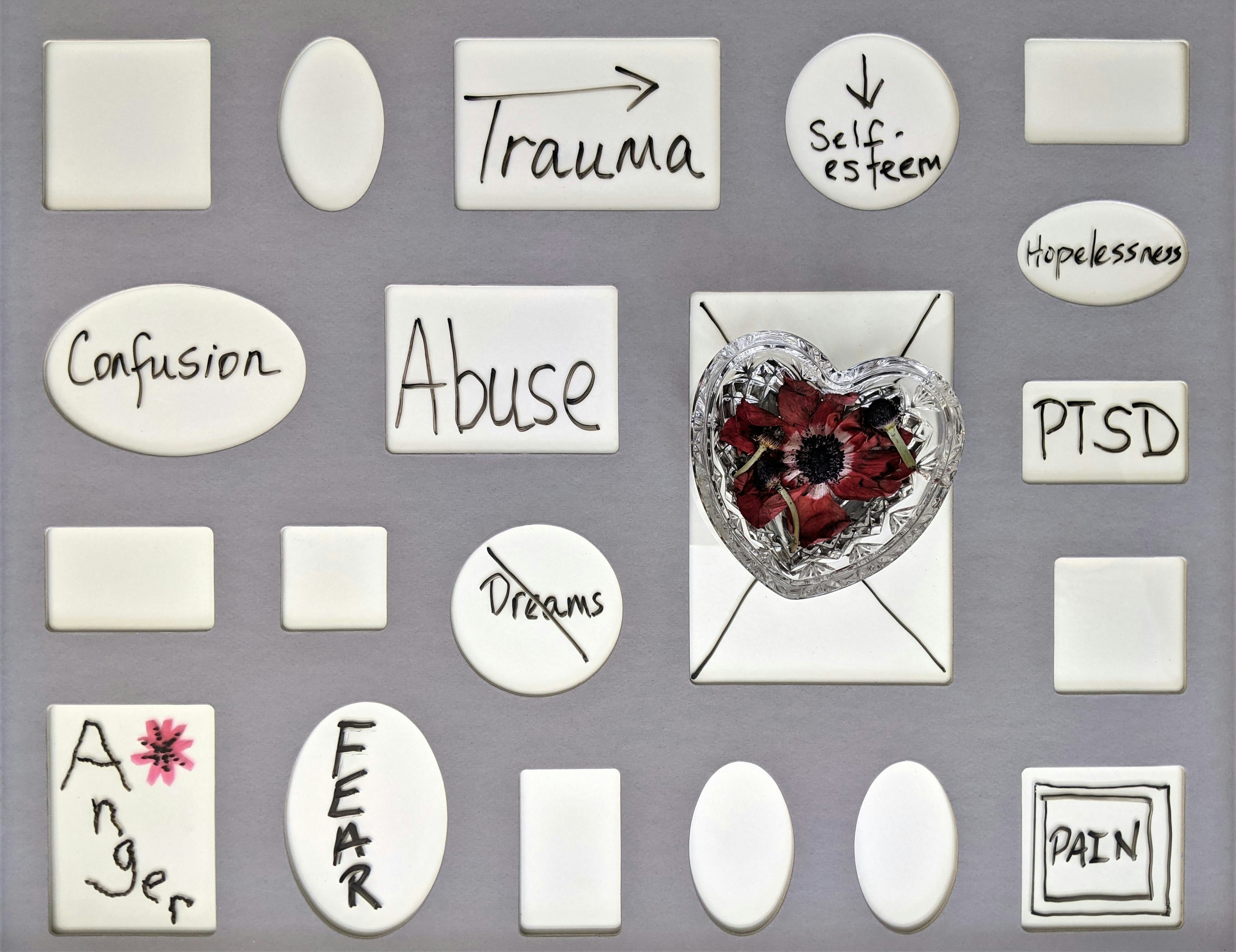
While many Canadians acknowledge that their mood has improved relative to the winter months (and boy, was this ever a winter!), there is a distinct and pervasive heaviness that continues to emerge in therapy rooms. Clients describe feeling exhausted despite functioning well. They speak of an underlying tension that remains difficult to shake. They report moments of joy, gratitude, and connection, yet simultaneously carry a persistent sense of unease.
The sun is out.
But the mood is still heavy.
As therapists, we are hearing a similar narrative repeatedly. When asked what feels different, many people point to two interconnected realities: the state of the world and the growing pressure of financial stress.
Human beings are remarkably resilient when faced with acute challenges. Our nervous systems are designed to mobilize resources in response to short-term threats. When danger appears, our bodies activate the stress response, releasing hormones that increase alertness, focus, and energy. This system works exceptionally well when the threat is temporary.
The challenge arises when uncertainty becomes chronic.
Over the past several years, Canadians have weathered a global pandemic, economic disruption, housing affordability concerns, inflation, labour market uncertainty, geopolitical conflict, and ongoing social polarization. While any one of these stressors would be significant on its own, many people have experienced them simultaneously. The result is not necessarily crisis, but rather injury due to chronic stress accumulation. Psychologists sometimes refer to this as allostatic load.
Allostatic load refers to the cumulative physiological and psychological burden created by chronic exposure to stress. The term describes the "wear and tear" that occurs when the body's stress-response systems remain activated for extended periods of time.
Imagine carrying a backpack: a single book may feel manageable, ten books become exhausting, and twenty books begin to affect posture, movement, and endurance. Stress often functions similarly.
Many Canadians are not carrying one stressor, they are carrying years of accumulated uncertainty. The nervous system was never designed to remain in a prolonged state of vigilance indefinitely.
Economic challenges are often discussed through statistics, interest rates, and market forecasts. Yet beneath every economic trend are people attempting to build lives. A year after the tariff-related disruptions that contributed to rising costs and economic uncertainty, many Canadians continue to feel financially stretched. While some economic indicators have stabilized, the lived experience of many households remains one of pressure.
- Groceries cost more.
- Housing remains expensive.
- Debt has become harder to manage.
- Savings feel insufficient.
- Unexpected expenses feel threatening.
For many families, financial stress is no longer an occasional concern, it has become a constant mental companion. Importantly, financial stress affects mental health not only because of what money can buy, but because of what money represents psychologically. Money often symbolizes safety, predictability, freedom, and security.
When financial stability feels uncertain, people frequently experience a corresponding erosion of psychological safety.
One of the most influential concepts in behavioural psychology and behavioural economics is the idea of scarcity mindset. Scarcity mindset occurs when an individual perceives that they do not have enough of an important resource, such as money, time, energy, or support.
When scarcity is activated, the brain narrows its focus toward immediate concerns. This process is adaptive in the short term. If resources are limited, focusing on survival makes sense. However, prolonged scarcity can create significant psychological consequences. Research suggests that scarcity consumes cognitive bandwidth, reducing our capacity for long-term planning, emotional regulation, decision-making, and creativity.
In practical terms, this means that people may become more irritable, more anxious, and more mentally fatigued, because their cognitive resources are increasingly devoted to managing ongoing concerns.
Many clients describe exactly this experience.
They are functioning.
They are working.
They are caring for their families.
Yet they feel depleted.
Not because they are weak.
Because they are carrying a sustained cognitive load.
Financial pressure is only part of the story. Increasingly, clients are also describing a profound sense of distress related to global events:
- Wars.
- Political instability.
- Climate disasters.
- Economic uncertainty.
- Technological disruption.
- Social division.
While human beings have always lived alongside global challenges, we have never before been exposed to them with such immediacy. Today, distressing information is available 24 hours a day.
A conflict occurring thousands of kilometres away can arrive on our phones within seconds.
A financial crisis, natural disaster, or political event can dominate our attention before we have finished our morning coffee. Psychologists refer to this phenomenon as collective anxiety.
Collective anxiety refers to widespread psychological distress that emerges in response to societal or global threats. Unlike personal anxiety, which is often connected to an individual's circumstances, collective anxiety is rooted in concerns shared by large groups of people. The challenge is that our brains evolved for local threats.
Our nervous systems were designed to monitor the dangers in our immediate environment.
They were not designed to process a constant stream of information about every crisis occurring across the globe. As a result, many people find themselves carrying emotional burdens that feel both deeply personal and impossibly large.
Another important psychological concept helping to explain this phenomenon is the availability heuristic. The availability heuristic is a mental shortcut in which people estimate the likelihood or significance of an event based on how easily examples come to mind.
When we are repeatedly exposed to news stories about economic instability, conflict, disaster, or uncertainty, these events become highly accessible in our memory. Consequently, our brains may interpret danger as being more immediate, pervasive, and unavoidable.
This does not mean people's concerns are irrational- many concerns are entirely valid. However, constant exposure to threatening information can leave the nervous system feeling as though it is perpetually bracing for impact.
Even during moments of safety.
Even during moments of joy.
Even on beautiful summer afternoons.
Perhaps what feels most striking this year is that many clients are not simply worried about specific problems. They are wrestling with deeper questions:
Questions about stability.
Questions about the future.
Questions about what comes next.
This reflects what existential psychologists have long understood: human suffering is not solely created by hardship itself but by uncertainty surrounding hardship. Existential psychology explores how people navigate fundamental concerns such as uncertainty, meaning, freedom, responsibility, and mortality. Periods of widespread instability often awaken these deeper concerns.
People begin asking:
- Will things get better?
- Can I build the future I imagined?
- What kind of world am I raising my children into?
- How much control do I actually have?
These are not simply financial questions, they are existential ones.
Perhaps the most important message for this moment is that many people are interpreting their heaviness as evidence that something is wrong with them. Yet from a psychological perspective, much of what we are witnessing appears to be a reasonable response to prolonged uncertainty.
Financial strain challenges our sense of safety.
Global instability challenges our sense of predictability.
Chronic stress challenges our nervous systems.
Existential uncertainty challenges our sense of control.
When these forces converge, emotional heaviness should not surprise us.
The goal is not to pathologize the experience, but to understand it.
The sun is out.
Many people genuinely are feeling better than they were in January.
But for many Canadians, there remains a lingering weight, one shaped not by years of accumulated uncertainty, financial pressure, and collective strain. Recognizing that reality may be one of the most compassionate things we can do for ourselves... Because understanding our distress is often the first step toward carrying it more gently.
If you are looking for support, our team at VOX Mental Health would be honoured to support you.