Nov 19, 2026
What a viral comedy sketch reveals about parentification, invisible labour, caregiver burnout and the expectations placed on women.
There is comedy, and then there is satire.
While comedy invites us to laugh at the absurdities of human behaviour, satire uses humour and exaggeration to expose social inequalities and uncomfortable truths that have become so normalized we rarely question them.
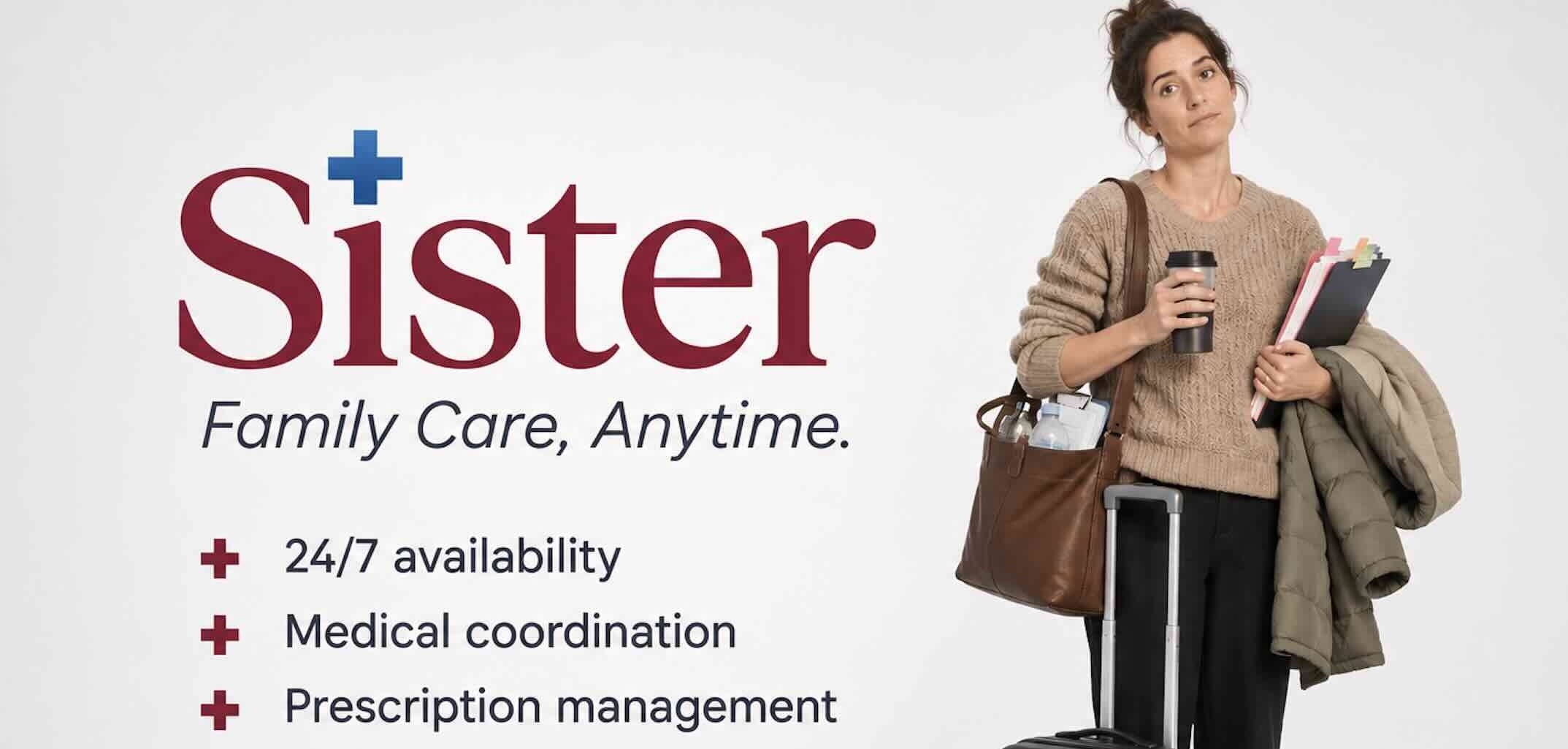
On November 14, 2026, Saturday Night Live aired a sketch titled “Sister,” featuring John Mulaney and Jane Wickline. Presented as an advertisement for an innovative elder care service, the sketch introduces a remarkably affordable solution for families navigating the demands of aging parents: a sister who will abandon her career, personal commitments and independence to provide continuous, unpaid care.
Meanwhile, her brothers are free to continue with their lives.
The premise is deliberately absurd, yet its familiarity is precisely what makes the satire effective. For many women, the sketch reflected an uncomfortable reality in which their time, emotional capacity and personal ambitions are treated as more negotiable than those of other family members.
Beneath the humour lies a much larger conversation about gendered caregiving expectations, family roles and the personal cost of being the person everyone depends upon.
Caregiving responsibilities are rarely distributed through explicit conversations about fairness, capacity or personal choice. Instead, they often develop gradually through family expectations, cultural norms and longstanding relationship patterns.
One sibling begins coordinating medical appointments, communicating with healthcare providers and managing medications. Over time, these responsibilities accumulate until that person becomes the family's default caregiver, often without anyone acknowledging that a decision has been made.
Research consistently demonstrates that women provide a disproportionate share of unpaid caregiving. According to the 2025 Caregiving in the U.S. report from AARP and the National Alliance for Caregiving, approximately three in five family caregivers are women.
These disparities reflect generations of socialization in which caregiving has been closely associated with femininity, while women's willingness to accommodate others has frequently been interpreted as a natural extension of their identity.
The result is a familiar dynamic: one person's participation becomes an obligation, while another's remains a choice; but being capable of carrying a responsibility does not mean that responsibility should automatically belong to you.
For some women, becoming the dependable family member in adulthood is a continuation of a role established during childhood. Parentification describes a family dynamic in which a child assumes emotional or practical responsibilities that exceed what is developmentally appropriate. This may involve caring for siblings, managing household responsibilities or becoming responsible for a parent's emotional well-being.
Although age-appropriate responsibility can support healthy development, chronic parentification can teach children that their value within relationships depends upon their ability to anticipate and accommodate the needs of others.
A child who is consistently praised for being mature, helpful or selfless may gradually internalize the belief that being needed is synonymous with being valued. In adulthood, these patterns can manifest as difficulty setting boundaries, excessive responsibility for others' emotions and guilt when prioritizing personal needs.
The dependable child may become the accommodating partner, the reliable employee, the attentive mother and eventually the daughter who manages an aging parent's care. Not every caregiver has experienced parentification. However, for those who have, caregiving responsibilities can reinforce deeply established beliefs about obligation, worth and belonging.
When being needed has become central to your identity, setting boundaries can feel less like protecting your well-being and more like disappointing the people you love.
One of the most recognizable elements of the “Sister” sketch is its portrayal of the administrative responsibilities involved in caring for an aging parent. Beyond providing physical assistance, caregivers frequently coordinate medical appointments, communicate with healthcare providers, manage prescriptions, navigate insurance requirements and anticipate changes in a loved one's needs.
This ongoing cognitive and emotional responsibility is often described as the mental load. Unlike individual tasks, the mental load involves continuously anticipating, organizing and monitoring responsibilities, often without a clear opportunity to disengage.
A sibling may offer to drive a parent to an appointment, while the primary caregiver remains responsible for scheduling the visit, preparing the necessary information and following up afterward. Although the practical task has been shared, the underlying responsibility has not.
This distinction is important because caregiving strain is not determined solely by the hours spent providing direct assistance. It also reflects the persistent experience of being accountable for ensuring that everything gets done.
There is a meaningful difference between helping someone manage a responsibility and assuming genuine ownership of that responsibility.
Family systems theory helps explain why unequal caregiving arrangements can persist even when they become unsustainable. Families develop established patterns of interaction in which members assume particular roles. One person may become the organizer, another the emotional mediator and another the family member who remains comparatively uninvolved.
When an aging parent begins requiring additional support, these longstanding roles often intensify.
The sibling who has always been responsible assumes more responsibility, while others continue participating in familiar ways. Over time, the caregiver's competence can inadvertently reinforce the imbalance. Because she consistently manages the family's needs, other members may feel less urgency to become involved.
When she eventually establishes boundaries, the resulting discomfort may be interpreted as a problem with her behaviour rather than an indication that the family's expectations require adjustment. These dynamics do not necessarily reflect deliberate exploitation. However, a family system can become inequitable without anyone consciously intending harm.
A family arrangement that functions because one person continually sacrifices her own needs is not necessarily functioning well... It may simply be functioning at her expense.
Caregiving can be a meaningful expression of love, but it can also involve significant emotional, financial and professional sacrifices. Family caregivers may reduce their working hours, decline career opportunities, take unpaid leave or withdraw from employment entirely. These decisions can affect financial independence, retirement savings and long-term economic security.
The emotional consequences can be equally substantial: Caregivers may experience chronic stress, disrupted sleep, social isolation, resentment and exhaustion, particularly when their responsibilities extend across multiple generations.
For women simultaneously raising children and supporting aging parents, the competing demands can become especially difficult to navigate.
Perhaps most challenging is the guilt that can accompany these experiences:
A daughter may love her parent deeply while resenting the unequal distribution of responsibility. She may feel grateful for their remaining time together while grieving the opportunities she has sacrificed.
Although the sketch highlights unequal expectations between siblings, it also draws attention to the broader systems that depend upon unpaid family caregiving. Professional home care, assisted living and other support services can be expensive, difficult to access or insufficient to meet the needs of individuals requiring ongoing assistance.
Even publicly funded services may involve eligibility restrictions, limited availability or gaps in care. Consequently, families are often left to compensate for shortcomings in formal support systems, with women disproportionately absorbing the resulting responsibilities.
This matters because caregiver burnout cannot always be resolved through improved communication or stronger personal boundaries. A family caring for someone with advanced dementia, for example, may face demands that exceed its collective financial and practical capacity.
In these circumstances, caregivers require more than encouragement to prioritize themselves. They need accessible services, meaningful respite, financial supports and systems that recognize the value of unpaid care.
Perhaps the most important question raised by the sketch is not whether caregivers love their families, but whether they have been afforded the same freedom to make decisions about their own lives as the people who depend upon them. For women who have spent decades being the responsible one, examining these expectations can be uncomfortable.
It may involve recognizing patterns of parentification, questioning deeply internalized beliefs about obligation or learning to tolerate the discomfort that accompanies setting boundaries. It may also involve acknowledging grief, resentment and exhaustion without interpreting those experiences as evidence of inadequate love.
Therapy can provide space to explore these patterns, understand their origins and develop more sustainable ways of maintaining meaningful relationships without consistently sacrificing personal well-being.
The goal is not to diminish the importance of caring for others, but to recognize that the caregiver's needs are equally deserving of consideration.
The effectiveness of satire lies in its ability to make familiar arrangements appear strange enough that we begin to question them. In “Sister,” the absurdity is not that an aging parent needs care or that a daughter might willingly provide it. It is the unquestioned assumption that her life can be reorganized around everyone else's needs while the lives of other family members remain largely uninterrupted.
Behind every dependable daughter, accommodating sister and seemingly tireless caregiver is a person with her own relationships, aspirations, limitations and needs.
A person whose time has value, whose exhaustion deserves attention and whose identity extends beyond what she can provide for others. Being the person everyone depends upon should not mean becoming the person nobody thinks needs support. Perhaps the most important question for the women who recognized themselves in the sketch is also the one they have rarely been encouraged to ask:
Who am I allowed to be when I am not taking care of everyone else?
VOX Mental Health provides psychotherapy in Barrie and virtually across Ontario. Our Registered Social Workers support individuals navigating caregiver stress, parentification, family relationships, burnout, grief and life transitions.